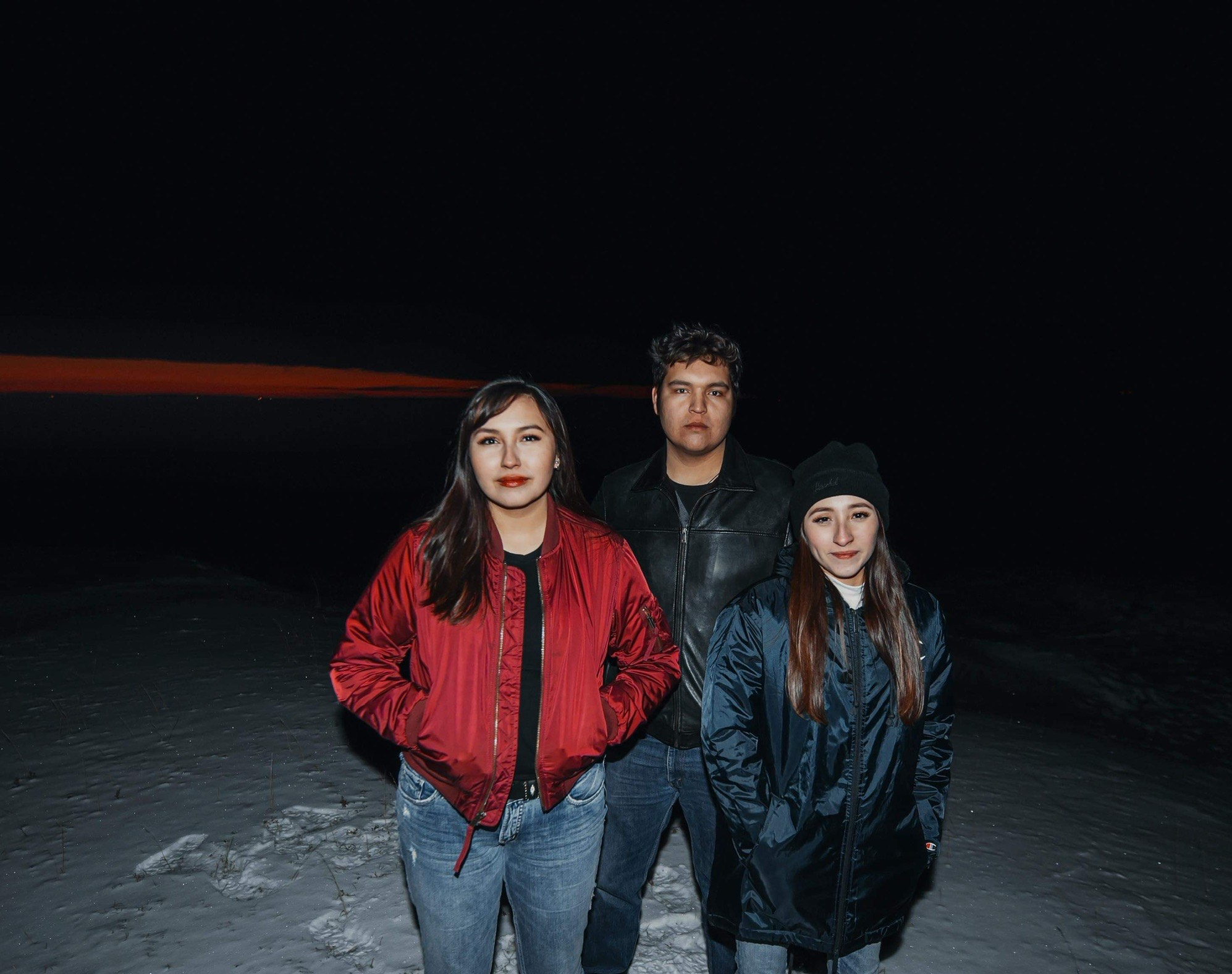
Friday, June 02, 2023

Interview with The Hi-Tops

The Canadian four-piece The Hi-Tops recently released their outstanding sophomore EP entitled Characters.  I had the chance to interview the band where we discussed the EP, the benefits of the four of them living together, the diversity of some of the new songs and more.


Can you give me some background on the band?

We're from Calgary, Alberta Canada! I (Kole) grew up with Luke, our guitarist, going to school and being friends since kindergarten! I met Will in high school and played hockey with Chandler. Two years after we were all interested in starting a band, so we got together and started jamming in my parents garage! 


I read that all of you now live together in a house in Calgary and wrote all the songs on the EP there.  Can you tell me about this? 


In September 2022 we all moved in together! Being together just created an extremely creative space where we all felt we could get better in. There were no parents or siblings telling us to turn down, so we really felt like this opportunity was our best chance to create and really build our chemistry and our sound. 


I’m assuming that wasn’t the case with the first EP.  How do you feel that made this EP different?


Every idea on the first EP was created independently and then brought to a jam session. On this EP whenever someone was practicing an idea the whole house could hear that idea develop and hear the inspiration and the approach towards it. This gave each song more context to how the lead songwriter was hearing the polished idea. We have also just all matured musically since the first EP so the ideas were just better and easier to work with. 


The band has been together since 2019, which is right before the start of the pandemic.  How did that impact the band and did the pandemic have anything to do with the decision to move in together?


The pandemic gave us a great chance to slow down and really focus in on our craft. We all kinda realized that the pandemic wasn’t ending any time soon, so we decided to all really hone in on our respected instruments which made gigging post pandemic an extremely smooth process. To your second question - there was a period of time where we weren’t allowed to see each other and jam, so when the opportunity came to move in we wanted to ensure that we could always jam no matter the circumstance. 


While the majority of the songs on the EP are on the heavier end of things, there are a couple that are more on the mellow or poppier side of things.  First up is “Peaches and Cream”, which is a track that I really love and is definitely the most different.   It has an extremely hook-heavy 80’s alt-pop vibe that to me at times sounds a little like the band The Housemartins.  Where did the inspiration, and the direction, of that song come from?


I had been listening to a lot of Australian bands at the time (Ocean Alley, Sticky Fingers, Dear Sunday, Skeggs) and I really started to like the way they used bright sounding major and minor chords all over the fret board. Specifically “Up In The Clouds” by Skeggs really inspired a fast paced melodic chord progression that eventually became “Peaches and Cream”. 


The other song is “Old Enough”, a track that starts off slower and atmospheric with hints of Santana and The Doors.  It also has a little jazz influence and then there’s a great guitar solo towards the end.  What can you tell me about that one?


I really appreciate classic rock and that sound, definitely a huge Jim Morrison and Santana fan. But at the time I was more interested in focusing on a simple groove rather than the fast-paced riff. I wanted to see the mileage I could get out of a simple but catchy chord progression and see how a song can form out of that. Usually, I really complicate things while I'm songwriting, but this song was written on a “first thought, best thought” basis . That being said, regarding the post chorus harmony guitar line, I specifically remember thinking to myself “what would Santana do here”. 


Have you had much feedback from older fans about these different sounding songs?


The main feedback has kinda just been how we always seem to be improving. Though the songs are different, you can still hear our voices and our characteristics that make us The Hi-Tops. We definitely write a diverse catalogue of music but we kinda always know that it still sounds like us, and we’re not trying to sound like anyone else. 


Even though the other songs are all heavier there is still plenty of diversity within them.  “Shiver” and “Pretender” both have a bit of a punk punch to them, while “Change of The Season” is more classic rock and “Criminal” has a big stadium sound to it.  Is the diversity something you consciously strive for or does it just happen?


I think it comes more naturally. We of course never try to write the same thing twice, and definitely never wanna be bound to one genre. We all pull from so many different influences that change week in and week out so naturally the ideas change and the songs change with them. When we wrote “Shiver” the band was listening to a ton of Billy Talent. With that we just wanted to write a song with that level of intensity and that level of Ian D’sa riffage and I think we came as close as we could! Conversely, when I wrote "Change of the Season", I was listening to a Billie Eilish live concert and wanted to write something with a pop like hook but tied together by solid song writing. 


Do you see the band continuing to have more diverse songs and musical directions on future releases?


This past EP was recorded in May of 2022 so we have been sitting on these songs for a while. With that we have written a ton of other songs and I can guarantee that the next catalogue of releases is going to continue to be just as diverse. 


You have a really fun video for “Change Of The Season” that’s reminiscent of some of the classic, somewhat goofy, videos that use to be all over MTV.  Can you tell me about that?


One of our favorite movies ever is Boogie Nights. We talked to the director of our music video Chris from “Melodic Imagery” and basically said we wanna fuse Boogie Nights, with the “Sabotage” Beastie Boys video, with the “3s and 7s” Queens of the Stone Age video. We can't compliment him enough, because he did a lot of the heavy lifting on that one and really brought it together. That one was really just us trying to be as goofy as possible while putting together a killer music video. 


I read that the band was initially called House Hippo.  Is there a story behind that name and why the change?


We honestly just were ready for a change. House Hippo was fun but we kinda just felt we grew out of it. 


What are your plans for supporting the EP now that it’s out?


We are heading for a small little Canada tour here in June! We're playing in Edmonton June 17th, Toronto June 22nd, Montreal June 23rd, Hamilton June 25th, Frogfest in Alberta June 30th and finishing off in Calgary at the Palomino July 1st. All the ticket links in are available in our bio! 


Is there anything else you would like to share with readers?


If you’re in town for any of the dates listed above! Come on down, we would love to meet ya! Follow us on Instagram @thehitopsband.


(Sodeh Records)  (The Hi-Tops / The Hi-Tops - Facebook)


Friday, May 19, 2023

Luther Grosvenor - Under Open Skies, Remastered & Expanded

Luther Grosvenor got his start playing in various bands in England in the sixties including Deep Feeling, which he formed with Jim Capaldi, later of Traffic, and then The VIP’s, featuring Keith Emerson on keys.  In 1967, following the departure of Emerson, The VIP’s recorded the album Supernatural Fairy Tales, but then changed their name to Art after Chris Blackwell, the head of Island Records, said he thought their name was dull.  After that album’s release, Gary Wright joined the band on keys, they renamed themselves Spooky Tooth, and released four albums before breaking up in 1970 (the band did reunite with a largely new lineup in late 1972, but Grosvenor had moved on).  At this point Blackwell asked Grosvenor if he would like to record a solo album for Island.  He accepted the opportunity, and since Wright had been the main songwriter for Spooky Tooth, this gave him the chance to write his own songs.  The resulting album was Open Under Skies, which has now been remastered from the Island master tapes and includes two bonus tracks that were originally released on singles.  In addition to contributing all the songwriting (with Githa Grosvenor contributing on three tracks), Grosvenor also co-produced the album with Tony Platt.  Platt was an engineer for Island and while this was his first producing credit, his future production and engineering credits include the likes of Bob Marley, AC/DC, Iron Maiden, Motorhead, Cheap Trick, Dio, Foreigner and many, many more.  Grosvenor also played guitar on all the tracks and bass on four, and surrounded himself with some other notable musicians including former Spooky Tooth bandmates Mike Kellie on drums and John Hawken on piano.  The original King Crimson drummer Mike Giles played on one track and bassist Trevor Burton from The Move played on two.  While there is a nice diversity to the the album, it is still a very cohesive collection.  “Ride On” is a great opening track that alternates between an infectious jazz groove with a hint of funk and choruses that are more rock before closing with a great party-like singalong that features harmony vocals from Jim Capaldi and Mick Ralphs, who he ended up replacing in Mott The Hoople a few years later.  Rerecorded later on by his band Widowmaker for their Too Late To Cry album, and also performed live by Mott The Hoople during his stint with the band, “Here Comes The Queen” is an extremely catchy, laid-back track with a country rock feel that features some nice slide guitar.  Also rerecorded by Widowmaker (this time for their eponymous debut), “When I Met You” is a tasty upbeat rocker with a bit of a bluesy side, a touch of country rock and some stellar guitar work.  With Grosvenor playing everything himself, including guitar, tambourine, cymbal, wood scraper and shaker, “Love The Way” is a gorgeous, acoustic love song, while “Waiting” is a really nice, laid-back rootsy track that at times brings to mind The Band.  Setting itself apart from the rest of album, “Rocket” is a standout song with a dark, somewhat bluesy, psychedelic swagger and a heavier edge that breaks down into a Hendrix-like acid rock closing.  The title track closes the album and is an anthemic cut that is a bit bluesy with a strong rock edge especially in the guitar department.  This expanded version also includes a couple of bonus tracks that were originally released on singles.  Starting with a horn section and then shifting back and forth between a more pop oriented sound and the horns, “Heavy Day” has some really strong guitar solos, but overall is a little disjointed.  The horns also show up on “All The People” an extremely hook-heavy track with an infectious funk beat.  Also included is a very comprehensive booklet with an essay on the album and an interview with Grosvener.  Under Open Skies is an outstanding release that allowed Grosvenor to showcase his songwriting, musicianship and singing.  It would have been interesting to see where he went from here as a solo artist, but instead of going that route he replaced Gerry Rafferty in Stealers Wheel for a short while, joined Mott The Hoople under the stage name Ariel Bender and then formed the band Widowmaker who released two albums.  Following Widowmaker, he left the music industry behind for the next nineteen years before releasing his second solo album Floodgates in 1996.  Since then he has continued to work as a musician including participating in Spooky Tooth and Mott the Hoople reunions.

Saturday, May 13, 2023

Old Dirty Buzzard - What A Weird Hill To Die On

Featuring ex-members of the bands Holy Terror, Zeke, Agent Steel, Mind Shaker and The Kings of Cavalier, the Washington based trio Old Dirty Buzzard have hit the ground running with their impressive full-length debut What A Weird Hill To Die On.  As soon as you hit play (or drop the needle) and the thick, lumbering chords of their cover of The Charlie Daniels Band’s “Long Haired Country Boy” hit your speakers, you know you are in for a treat.  Somewhat reminiscent of Black Label Society, their version is slow, doomy, dirty and sleazy, and above all, heavy.  Picking up the pace for the next couple of tracks, “Coughing On The House Of Cards” comes across like a dirtier, sleazier Motorhead with a bit of stoner rock, while “Lies” screams pure Motorhead 101.  Following the lumbering, yet powerful, slow and sludgy instrumental “Paleozoic” is the gritty rocker “Corpse Shoveler”, which is enhanced by some great fuzzed out guitar.  Another cover is up next in the form of Junior Brown’s “Highway Patrol”, an all-out hard rocker with a hint of the original’s honky tonk swagger.  Providing a real showcase for the guitar work (which is actually top notch throughout the album) is “Hammer Coming Down”, a powerful track that is as heavy as its title would imply.  While the band has managed to keep things diverse and fresh up to here, they manage to go even further with the last two tracks, both of which differ a bit from the rest of the album.  “Path Of The Dead”, at over seven minutes long, is a darker track with a bit of a black metal mystique and more of a percussive foundation.  Closing out the album perfectly is “The Reckoning”, which clocks in at over eleven minutes, and has the hard charging power and shifting tempos of an Iron Maiden epic, but musically is much darker and grittier.  What A Weird Hill To Die On is a fantastic introduction to a band that I hope to be hearing a lot more from in the future.  

(Rotten Records)

Wednesday, May 10, 2023

Warfare - The Lemmy Sessions

After stints in several bands including Major Accident, The Blood and Angelic Upstarts, drummer and vocalist Evo wanted to form a band who fused “heavy metal riffs with punk lyrics”.  In 1984 he left the Angelic Upstarts, recruited bassist Falken and guitarist Gunnar, and formed Warfare, releasing their debut album later that year.  In January of 1985, during a show by Tank at Dingwall’s in London, Evo approached Lemmy and told him that he would be producing the next Warfare album (there was some asking too, as detailed in the essay included here).  The resulting CD, Metal Anarchy, is considered by many to be the pinnacle of their career.  In addition to a newly remastered version of that release, this new three CD set, The Lemmy Sessions, includes the recently discovered and previously unreleased “rough mix” by Lemmy taken from the original cassette given to Evo to approve before the final mix, and a third disc containing the Two Tribes and Total Death EPs and bonus track “Two Tribes (From Hell Mix)” (all also newly remastered) that were released prior to recording the album.  

Following a short distorted musical snippet from The Sound Of Music, Metal Anarchy (disc two here) gets going with “Electric Mayhem”, a pummeling tune that sets the tone for the rest of the album, with equal parts raw garage rock, early punk and plenty of Motorhead influenced rock.  While there are variations like the slower passages in “Warfare”, the super heavy drums, raw rock and punk vocal delivery of “Disgrace” and the gorgeous jangly guitar opening of “Military Shadow”, which then hits you upside the head, for the most part they stick pretty close to the core sound of the opener.  Ironically, even though the songs are heavy and a bit ragged, they almost always maintain a strong sense of melody. In addition to production by Lemmy, Würzel (Motorhead guitarist at that time) plays guitar on the title track.  With it being an almost forty year old cassette the rough mixes found on disc one do have some tape dropouts from time to time, but overall the sound quality is surprisingly good.  All nine tracks from the album are here and it makes for interesting glimpse behind the curtain.

Disc three kicks off with The Two Tribes EP and their take on the Frankie Goes To Hollywood title track.  They definitely give it the brutal Warfare punch, but still maintain the hooks of the original.  The other two tracks on the EP were songs that had been in their live set for a while, the hard charging “Hell” and “Blown To Bits”, the latter of which was originally written for their debut album.  Next up is the Total Death EP, which was produced by Algy Ward, founder of the band Tank and former member of the Damned.  The EP opens with an early version of “Metal Anarchy”, which is a strong version, just a little less polished. Even though the remaining three EP tracks are remastered they still sound fairly muddy and musically seem a little repetitive and are definitely the weak point of this collection.  Closing out the disc is the From Hell mix of “Two Tribes”.  The Lemmy Sessions is an outstanding box set covering this high point in Warfare's history and also includes a great booklet with photos and a very informative interview with Evo.    

(HNE Recordings)

Sunday, May 07, 2023

Jah Wobble - Dark Luminosity - The 21st Century Collection

After making his recording debut as bassist for Public Image on their first two releases, Jah Wobble moved onto what has become an extremely fascinating career with a dizzying array of solo releases and collaborations.  Over the course of sixty-six tracks taken from thirty-two releases (plus a digital single), Dark Luminosity - The 21st Century Collection is an impressive four CD box covering an extremely diverse array of styles.  With the exception of spoken word tracks taken from his Odds, Sods and Epilogues release, that open each disc (and close two), all the songs are presented in chronological order and are taken from the years 2000 on, when he and his family moved from the East of London, where he was born and raised, to Stockport in order to be closer to his in-laws.  

Disc one kicks off perfectly with the limerick "There Was A Young Man With A Bass".  Musically a lot of the tracks on this disc have a Middle Eastern slant to them.  He incorporates it into the slow, dreamy psychedelia of “As Night Falls: Part 1” (and Part 2), dub with two versions of “Lam Tang Way”, the noisy jazz of “Full On” and the slow trance of “La Citadelle”, which along with “Shout At The Devil” features vocals from Natasha Atlas.  Other highlights on disc one includes “Fly 3” and “Fly 9”, a couple of ambient tracks, the first more of a chill track with a slow funk groove, while the other has an upbeat trance beat with a hint of the Middle Eastern vibe popping up again, plus two tracks from the soundtrack to the French film Le Fureur.  Closing out disc one and opening disc two (not including the two spoken words tracks) are a couple of songs from English Roots Music, Wobble’s foray into English Folk music.  Featuring Liz Carter on vocals, “Cannily Cannily”, is a Ewan MaColl tune that has a foundation in English Folk but is given a bit of a funky Jah Wobble treatment (his bass work really delivers on this cut), while “Unquite Grave” is an absolutely gorgeous song that sticks pretty close to the traditional English Folk sound.     

The touring group The English Roots Band followed that album and is represented on disc two with the instrumental “And There Was The Sea” and “No No No”, a cover of Dawn Penn’s hit.  Both have a nice rocksteady beat, the latter of which has a slow, infectious groove and some fuzzy bass work from Wobble.  “Elevator Music 4” is a really good instrumental that sounds like it is from a movie soundtrack, while “Elevator Music 9” is more of an experimental soundscape.  Taken from the album MU (meaning emptiness in Japanese), where he worked with engineer Mark Lusardi, who also worked with PiL on some early tracks, “Mu” is an interesting mixture of ethereal and dub.  The experimental side of things comes to the forefront again on the dance beat driven “Looking Up At The Sky Again” and there is a hint of the rocksteady groove in the cold electronic sounds of the breezy dance tune “And Some May Say” and “Whatever Happens”.  A good representation of Wobble’s work in world music can be found on disc two starting with “Solitude”, taken from his Chinese Dub album, where he worked with a 22-piece group of Mao and Tibetan musicians and dancers, Sichuan opera mask changers and an Anglo-Chinese dub band mixing dub rhythms, electronica and Chinese instrumentation.  There are also two tracks, “Kokiriko” and “Ma” from his Japanese Dub album where he worked with the Nippon Dub Ensemble. Lastly, there is “Brazil”, a hypnotic track with a driving samba beat.  

Following the spoken word track “Air”, disc three kicks into full gear with the percussive blast of “Blowout” followed by the laid-back, horn enhanced “City Meets Country”.   The hook-heavy “Psychic Life” finds him teaming up with his former Public Image bandmate, the late Keith Levene, and vocalist Julie Campbell from the band Lonelylady, for what is probably the most accessible track here.  “Wealth” and “Terminus” are nice ambient tracks that do a great job of setting a mood.  Featuring Bill Sharpe from the group Shakatak on keys and some really nice trumpet from Sean Corby, "Spanish Place" is a really strong jazz tune.  He then meshes jazz and funk with “Cosmic Blueprint”, which also has some spacy keys, and “Mandala”, once again showcasing some great bass work.  Next up are two tracks from his collaboration with the Moroccan duo MoMo.  “Sabri = Patience” is an absolutely gorgeous, laid-back song driven by some great piano, meshing North African music with jazz and funk, while “Sudani Manayo” is a more upbeat track that adds some dub to the mix.  Sounding like it should be bouncing off the walls of dance clubs everywhere, “Chunk Of Funk” is an absolute killer funky dance track with more of that thumping bass, while the salsa tinged jazz and dub of “Cuban Dub” is just as spritely and infectious.  Closing out disc three is “L’autoroute Sans Fin”, which starts off like a Kraftwerk tune but then turns into a hypnotic piano driven track with trip hop beats and swells of synths.  

Harkening back to his earlier days, the music on disc four kicks off with the taut, aggressive, and a little chaotic, punk of “Mind In Turmoil” and “Humans Are Full Of It”, which has a low funk groove and a vocal delivery reminiscent of Ian Dury.  Teaming up again with Bill Laswell “The Perfect Beat” and “Dark Luminosity” are strong experimental jazzy tunes with driving beats, a bit of funk and dub and some effects.  “Fly Away” is really nice, laid-back jazz and “Take My Hand” is intense, but somehow laid-back at the same time, with a bit of jazz and funk and a subtle reggae beat.  The next three tracks are from the album Nocturne In The City, which was recorded during lockdown.  They all have an experimental ambient jazz groove, with “Mooching About” adding a spacey electronic element and “Lockdown 7 (Reprise)” a bit of a funk beat.  “End of Lockdown Dub” is the first of two tracks taken from the album of the same name (released of course at the end of lockdown) and is an upbeat instrumental that sounds like it would be the perfect accompaniment to people dancing in the streets after a lockdown, while “Choral Ocean Dub” is another uplifting cut but takes it down just a notch and adds an infectious reggae beat.  Next up are tracks from the Jah Wobble & Family album Guanyin, featuring his sons Charlie on er-hu (Chinese violin) and John T. on western drums, Chinese drums and Chinese zither, and his wife Zilan on Chinese Harp.  The Chinese instrumentation and influence are very strong on both cuts with “Dim Sum”, which also contains vocals from Charlie, a massively infectious hip hop tune that has should’ve been a hit written all over it, and “Guangzhou Funk” of course adds some funk to the mix.  Closing everything out is “Tyson Dub”, a really solid dub track that’s a little dark and heavy, with some great bass work.  It was originally released in 2021 as a digital single to commemorate their Staffordshire Bull Terrier, who passed away that year, and is a fitting final track.   While I was familiar with Wobble before listening to this box set, I have to say I was not prepared to be as mesmerized by what I heard as I ended up being. As I made my way through, I found myself looking up the individual releases over and over and have already expanded my collection.  

(30 Hertz Records / Jah Wobble)

Wednesday, April 26, 2023

Chickasaw Mudd Puppies - Fall Line 

It was most likely their association with Michael Stipe that first brought the Chickasaw Mudd Puppies to my attention in 1990 with their debut release White Dirt.  He had been intrigued by the Athens, Georgia duo and along with John Keane produced that album.  He also went on to produce their next effort 8 Track Stomp along with the legendary bluesman Willie Dixon.  Over the course of those two records Brant Slay (vocals, washboard, harmonica) and Ben Reynolds (vocals, percussion, electric guitar) used a combination of traditional instruments and others they invented like the stomp board, and along with items like cans and the washboard they spit out their own unique sounding raw, bluesy, swampy rock often with a shot of punk energy, some garage rock and country, that was as infectious as it was quirky.  Unfortunately, they didn’t get a lot of attention from the record buying public and in 1992 they called it a day.  Fast forward to 2011 when they get a call saying they want to use the song “Ponky Knot” for the movie The Mechanic.  The band didn’t own the rights to the song, so they rerecorded it as “Chicken Bone”.  This motivated them to regroup, adding a third member Alan “Lumpy” Cowart, drummer for The Beggar Weeds, who continuing in that Mudd Puppies fashion also played things like buckets, trash cans, blocks and more.  Now, twelve years later, we have album number three Fall Line, which was mixed and mastered by one of their old producers John Keane.  Kicking the album off with the guitar blast on “9 Volt” it's like they never left.  Hard charging, dirty, fuzzed out guitars, driving drums, harmonica - all the pieces are in place.  From the slower, but still gritty and raw "Preacher" and "Roadkill" with its slinky, slightly funky beat and dirty blues groove to "Scale, which starts with an acoustic guitar and moves into a laid-back rocker with a powerful undercurrent along with that Mudd Puppies quirk and the just under two minute blast of "Florida" on to the darker thick grooves of closer "Little Man", there isn’t a bad track to be found here.  The addition of Cowart definitely gives their sound an added element and there is a sense of maturity here, but neither of these keep them from sounding like anything other than themselves.  If you missed out on these guys the first time around, do yourself a favor, grab a copy of Fall Line and don't make the same mistake again.  

Sunday, April 23, 2023

Circus 2000 - I Am The Witch - The Anthology

The northern Italy based band Circus 2000 was active for about three years at the beginning of the seventies.  Unfortunately, they really didn’t get a lot of attention at that time, but then all of a sudden in the late eighties collectors started paying big money for copies of their two albums. Now, with the new two CD set I Am The Witch - The Anthology, both of those albums are available in one place along with single cuts, mixes and the only two surviving tracks from what was going to be their third album.  

Vocalist Silvana Aliotta got her start at an early age and had some success, even releasing a handful of singles under both her actual name and the name Silva Grissi.  She started listening to new American and English music, especially psychedelia, and wanted to move towards more rock-oriented music.  At this point she teamed up with Marcello ‘Spooky’ Quartarone on guitar, Gianni Bianco on bass and Roberto ‘Johnny’ Betti on drums, who at the time were playing jazz and more experimental music under either the name Genius or Best Genius (it's debated which name it actually was).  They signed a deal with the Milan-based RiFi, but the head of the label didn't like their name, so they became Circus 2000.  While the Italian progressive rock scene was getting its footing at this time, instead of using their jazz background and going that route, they decided to follow the path of American and British bands with three minute songs and English lyrics.  Their self-titled album, which kicks off disc one, was released in November 1970, and with Aliotta’s strong vocals they were at times reminiscent of mid-sixties Jefferson Airplane.  This is most evident on the standout track “I Am The Witch”, a heavy psychedelic rocker with distorted vocals and some great guitar work (there are some hints of the main lick from Shocking Blue’s “Venus”).  Tracks like the driving “Sun Will Shine” with its fuzzed out guitars, and the swirling “While You’re Sleeping”, which shifts back and forth from a really lazy groove to a more intense chorus, are also more straight-ahead psychedelia, but other cuts find them mixing things up a bit.  While they also have a psychedelic foundation, opening track “I Can’t Believe” and “Magic Bean” (with lyrics about Jack and the Beanstalk) respectively add a really nice folk element and a bit of an Indian flavor (with sitar-like guitar work).  “I Just Can’t Stay”, complete with flute, is a really nice track that sounds more like British Folk rock, and “Must Walk Forever” is a darker, moodier rocker with an Egyptian vibe.  Drawing from their earlier days, “Try To Live” is a more offbeat cut that starts off like raw, noisy jazz before moving into a catchy, funky / jazzy groove with a killer acid rock guitar solo.  Closing out the album is the explosive bluesy acid rocker “The Lord, He Has No Hands”.  Overall this is an outstanding album with one drawback.  The brevity of a lot of the tracks (three of them coming in at around two and a half minutes and two others at two) make some of them sound like they were just cut off short.  It would have been nice to have them fleshed out a little more.  Also included on disc one are six bonus tracks, which include the Italian and English versions of the “I Am The Witch” / “I Can’t Believe” single and a third standalone single “Regalami Un Sabato Sera”, a rather odd poppy tune that is a bit of a mess with horns, a scattered arrangement and vocals that are almost screechy at times.  The flipside is “Ho Regalato I Capelli”, a longer version of the album track “Must Walk Alone” sung in Italian.  Unfortunately for the band, the album only ended up being released in Italy, and later on Turkey.  To make matters worse, once it was released, the band found out that none of them were a member of the collection agency SIAE, so their songs were credited to Bob Michaels, who had played organ with Dave Anthony’s Moods, an Italian-based British group in the late Sixties, and someone named Vermer, who ended up being a music publisher names Marinco Rigaldi, so that’s who got all of the royalty payments.   

Even though their last single wasn't representative of the band's sound, they were shifting direction and playing Italian rock festivals alongside bands like Colosseum, Manfred Mann and The Pretty Things.  At this point, with Franco 'Dede" Lo Previte on board as their new drummer, they released their second album An Escape From A Box.  With only five songs, ranging from five minutes to over eight and a half, this album was quite a departure from their debut.  Kicking things off is “Hey Man” which opens with a nice folk sound before evolving into more of a folk prog tune with some really strong, expansive instrumental sections.  The slow, swirling psychedelia of “You Aren’t Listening” has some Indian undertones and a very eerie quality thanks to the calm, mysterious vocals.  “Our Father” starts with a moody, slow blues groove with a bit of a jazz undercurrent and then expands with some choral like backing vocals before ending with a jazzy instrumental section.  The album highlight is the powerhouse “Need”, a track of twisting, turning bluesy psychedelia, a touch of prog, some really strong jazzy instrumental sections and a great vocal performance from Aliotta.  Album closer “When The Sun Refuses To Shine” is a strange and experimental, yet very interesting, psychedelic space rock track.  Just like with their debut, the band got no songwriting credits here, and therefore no royalties, with Visir (an alias for the album’s producer Alessandro Colombini) and Vermar credited instead.  Following three bonus tracks that are basically an edited version of “Need” that was used for jukeboxes and “Hey Man” split in half for two sides of a single, are two tracks potentially recorded for a third album that was never to be. When label owner Ansoldi listened to the new songs he didn't like them and tried to push them in a musical direction they didn't want to go in, which basically was the end of the band.  These two tracks also mark the only appearance of new drummer Louis Atzori and were both recorded in Italian.  While “Dove Va La Mia Gente” finds them shifting gears again moving in a much more mainstream rock direction, “L’Ultimo Paese” is a really good track that balances both the experimental psychedelic and prog elements of their earlier work with the more melodic rock.  It is actually one of the strongest tracks here and is an excellent showcase for the diverse vocal talents of Aliotta and the musicianship of the band.  Rounded out with an excellent booklet full of pictures, memorabilia and an essay detailing the band’s history, I Am The Witch - The Anthology is an outstanding collection that gives this band the recognition they rightly deserved over fifty years ago.    

(Grapefruit Records)

Wednesday, April 19, 2023

Interview with Double Rider

Following last year's impressive three song EP, Double Rider, comprised of siblings Hannah and Lennon Owl Child and their cousin Erin Many Heads, are back with their full-length debut Times Of The Day.  Alongside three originals, the album also includes six songs written by their late grandfather Matthew Many Heads between 1972 and 1992.  I recently interviewed them about their grandfather and his songs, the diversity of the album and alot more.    


Can you give me a little background on how the three of you decided to form a band and also how you decided to primarily focus on recording songs that were written by your grandfather?

We grew up with music; our parents and grandfather would jam on special occasions, such as birthdays or New Year's Eve gatherings. As we got older, we had access to their instruments as they kept them in Erin's dad's basement. Not to mention, Lennon had been a drummer since three years old. In the summer of 2014, we decided to test out these instruments, and from there, we just kept playing. I don't think we even considered ourselves a band until our first performance, which was at the 2014 Siksika Nations Run As One Music Festival. After that performance, we knew we had something and decided to continue with it. 

As for focusing on our grandfather's songs, when we started proving to our family, including our grandfather, that we were taking music seriously, our grandfather gave us his blessing to perform, and later record, all of his songs. He still has so many in his vault, and we’re so excited to continue recording and sharing his songs! 

The band was originally called Third Generation.  What motivated the name change to Double Rider?

After several years of performing under Third Generation, we felt that there was a change in direction, especially in our identity - Third Generation was no longer us. 

“Double Rider” in Blackfoot is “Nahtkohtkiitohpiih,” our grandfather's name. It wasn’t until after our grandpa passed that we changed our name. We felt that after the awareness of the finding of the BC graves in 2021, we should honour our grandfather and what he endured as a Residential School Survivor.  Also, in a way, he is always with us when we perform. When people see us as “Double Rider,” they’re also seeing our grandfather. 

Did you make many changes to the songs your grandfather wrote or are they fairly close to what he initially wrote?

They are fairly close to what he originally wrote. Except for “Cold, Cold Morning” where we had to improvise the lyrics due to not knowing what the original lyrics are. There were also several moments in his songs where we created a new bass line or guitar riff, etc. 

What kind of selection process did you go through when deciding which of his songs to record?

There wasn’t really a specific process. A couple of years before he passed, we would jam with him which helped us learn some of his songs. So, that helped us decide what songs of his to record, mainly because we already had an idea of how they should sound. 

Your EP opens with “Echoes of the Past”, a politically charged song that I read he wrote after a land dispute between a group of Mohawk people and the town of Oka, Quebec called the Oka Crisis.  That’s really the only song of his that you’ve recorded that comes across to me as political.  Everything else sounds like it’s more about relationships.  Did he write other political songs or was that just a one off? 

There are a couple more songs he wrote that have a political undertone to them. “Echoes of the Past” is broader as it discusses the battles that our ancestors overcame post-colonialism. The other politically charged songs he wrote are more central to his perspective as an Indigenous individual and his viewpoints of the world around him. We’re definitely excited to record and share these songs in the near future. 

I love the diversity of the songs on the album.  There are elements of everything from folk, country, blues and roots rock to pop, classic rock, psychedelia and raw garage rock.  Were your grandfather’s songs originally that diverse or do you think it’s more the influence of you as a band playing his songs?

Yes, the album is very diverse! We definitely have our own sound that we bring to the table, and I think it has influenced the sound of his songs. For example, “Happy Is How I Feel” and “Cold, Cold Morning” had more of a 60s pop sound to them when he originally wrote them. But after we performed and recorded them, there’s now a sort of contemporary-classic rock sound to them. 

This isn’t a question, but I just wanted to compliment you on just how incredibly catchy the whole album is from start to finish. “Cold, Cold Morning” and “Happy Is How I Feel” are definite earworms that you will find yourself singing all day long. 

That means a lot - thank you so much! We are definitely proud to know that these songs, specifically the ones you mentioned, are well received. We imagine our grandfather would be happy with how it all turned out! 

While “One, Two, Three” and “Get Away” are a couple of heavier songs, “So Long To Wait” still really stands out from the rest of the album.  It’s an awesome raw garage rocker where the band just lets loose.  Can you tell me a little about that song?  (I would imagine that is a fun one to play live!)

Yes, it is definitely fun to perform live! This was one of the first heavier songs we learned (and jammed) with our grandfather. We loved seeing him let loose with the song and see his own creativity with the solos. Since then, we've added our own flare. Sometimes, when the guitarist is feeling extra groovy, a wah-wah pedal is added to make the song even more groovy. 

With two of you contributing lead vocals how do you decide who is going to sing on which song?

Sometimes it's tricky to decide who is going to sing what; but usually, we test out which songs either of us is more comfortable singing. There are some cover songs that Lennon and Hannah fight over, and then it comes down to who sings it better! But most of the time, we try to be fair and split the songs evenly. 

Are there any recordings of your grandfather’s versions of any of these songs, and if so is it possible to hear them anywhere?

There are some recordings of his songs, but they are on cassette tapes and at this moment they are starting to stretch! (Which is unfortunate). So, trying to get these songs out there for others to listen to is a very tedious task; but we are trying to get them on to a digital platform so we can share them with everyone else. 

Do you plan on continuing to focus more on his songs on future releases or will we be hearing more band originals?

We are moving towards sharing our own songs, which features our own sound and creativity. But we are definitely going to continue recording more of his songs. 

The album was released by Major Minor Music Project.  Can you tell me more about that?

Major Minor Music Project is a non-profit organization that puts a spotlight on up-and-coming artists in Alberta, Canada. There are many events the organization puts together at various venues so musicians and bands, like ourselves, can have a public platform to share our music. We've been working with Major Minor for the past five years, and "Times of the Day" was a project they funded so we could release our very first album. Their organization is very important as they keep the music scene alive in our hometown.

What are some of the biggest pros and cons of being a band comprised of relatives?

The pros are that we've known each other since birth, and that means, we know how to stick together even during challenging times, whether it's personal or within the band. The biggest con is that sometimes there are moments where we do get under each other's skin because we've known each other for so long. Overall, the pros far outweigh the cons. 

In 2020 you did your first tour, which was The First Nations Tour where you toured alongside notable First Nations artists.  Who are some of your favorite First Nations bands that you would recommend readers check out? 

There are so many. But to name a few, 

- Bebe Buckskin is a powerful Indigenous artist that knows how to rock. 

- A younger band that we've had the honour of sharing the stage with is Desert Orchid. 

- For those that enjoy a heavier sound, No More Moments is another band that we really enjoy. 

You should definitely check them all out!

Do you have any plans to expand your touring out further?

Definitely! We are totally open to tour outside of Alberta! If anyone is interested in inviting us out to festivals or local venues, we're there!

I know Times of the Day is available to stream online, but where can readers get physical copies of the CD if they are interested?

Yes! We have physical copies and can mail them out! We're currently working on an online method to purchase our CD. Until then, reach out to us on social media and we can definitely send out a physical copy!

Is there anything else you would like to share with readers?

We just want to say thank you for listening to our music; we appreciate it so much! We're so honoured that we get to do this, and that we can share our grandfather's song, as well as our own, with everyone else! 


Thursday, April 13, 2023

The Barraducas - Drop Out With The Barracudas (Deluxe Edition)

This three-CD deluxe version of Drop Out With The Barracudas, the debut album from The Barracudas, was compiled by the band's songwriter and guitarist Robin Wills.  He dug deep into his personal archives for twenty-one previously unreleased recordings, that are included amongst the sixty-one bonus tracks, including singles, demos, early rehearsals and live cuts in this outstanding collection.  

The Barracudas got their start at a Dead Fingers Talk show at the Speakeasy club in London when vocalist Jeremy Gluck met guitarist Robin Wills and they bonded over their admiration of The Seeds.  After Jeremy returned to Canada, they exchanged tapes and letters and Robin said if he ever came back to London he should sing a song for his new band.  Jeremy took him up on that and returned to London.  At this time Robin had been working with a bassist named Mike Sarna and they recorded a cover of The Standells' “Barracuda". Once Jeremy got there, they started writing songs with "No Ideals" being the first one they recorded.  At this point they changed their name to The Barracudas, got rid of Mike, then brought in brothers Starkie and Adam Phillips on bass and drums and recorded a couple more tracks.  Still looking for members more in touch with what they were doing, they replaced the brothers with bassist David Buckley and drummer Nick Turner, and the lineup was complete.  In January 1979 they recorded some demos and then in June their first single ("I Want My Woody Back" / "Subway Surfin"). Another set of demos was recorded in November of that year, whic got them interest from several labels including Epic, RAK and Sire, with them eventually signing with EMI. They released the single "Summer Fun" and after it sold 50,000, they went in to record their debut album Drop Out With The Barracudas.  

While their initial singles were more of a punky surf pop, the band had decided they wanted to move in a more folk and psychedelic garage rock direction.  Due to this the album was split in two stylewise with side one called the “Down Side” and side two the “Up Side”.  After kicking the album off with the catchy power pop and garage rock punch of “I Can’t Pretend” they go into full on ringing guitars mode of The Byrds on “We’re Living In Violent Times”. “Don’t Let Go” is a really cool, kind of stripped down tune that to me strangely has echoes of The Cure’s “Boys Don’t Cry”.  In a complete reversal of their surf side, their fascinating cover of Buffy St Marie’s “Codeine” slows things way down with almost droning guitars and a little Byrds jangle.  With some really heavy hitting drumming from Turner, “This Ain’t My Time” is a driving garage rocker full of buzzing guitars.  The psychedelia and organ of “I Saw My Death In A Dream Last Night” is described perfectly by the band in the CD booklet as “an homage to the pop psych of The Electric Prunes”.  Closing out the “Down Side” is “Somewhere Outside”, an easygoing jangly rocker.  The “Up Side” opens with the first single “Summer Fun”, a super catchy track with the hooky punk punch of The Ramones, the harmonies of The Beach Boys and tons of Ba-ba-ba-ba-ba-ba-ba-ba-ba’s. It is followed up with “His Last Summer”, a fun death disc (a la The Shagri-Las’ “Leader Of The Pack) given the surf treatment.  “Somebody” is a ragged sixties tinged, garage rocker and “Campus Tramp” has a slight bit of a jangle to it, but more of an alt rock vibe (interestingly, there is a guitar riff that pops up throughout the song that is very reminiscent of The Pretenders’ “Back On The Chain Gang”, which was released the following year).  The surf sounds are in the forefront on the tracks, “On The Strip”, reminiscent of The Rivieras’ “California Sun”, but with a garage rock edge, and “California Lament”, which meshes a little Beach Boys, some of The Byrds’ jangle and big Phil Spector wall of sound vocals.  After starting with some surf harmonies, the anthemic, hard charging, punk tinged garage rocker “(I Wish It Could Be) 1965 Again” closes the album out perfectly.  The first eleven bonus tracks round out disc one and include the B-sides to all of their singles, some alternate takes, demos and a compilation track.  The single B-sides “Chevy Baby” (also included here in a darker demo version), the Ramones-y “Rendezvous” and “The K.G.B. (Made A Man Out Of Me)” are some of the highlights.  Other tracks of note are an alternate Kenny Laguna version of “Summer Fun”, with more prominent backing vocals from Joan Jett, a demo version of Ian and Sylvia’s “You Were On My Mind”, which is better known by the version from We Five, and “Watching The World Go By”, a track from the compilation A Splash Of Colour, that found them venturing into psychedelia and doing it quite well.  

Disc two is an absolute treasure trove, crammed with twenty-five demos recorded at various sessions between 1979 and 1981.  Starting things off are six cuts recorded at Freerange Studios in 1979 including demos of Drop Out… tracks “Don’t Let Go”, “(I Wish It Could Be) 1965 Again” and “His Last Summer”, along with power pop gem “Neighborhood Girls”, a demo of future b-side “Surfers Are Back” and a great cover of “Little Red Book”.  While the performances themselves are often a little rawer and edgier (something I actually prefer) they are well produced and sound great.  Next up are a couple of demos from 1980, with an early version of “Summer Fun” and the somewhat generic rocker “Radios In Revolt”, followed by seven tracks from sessions at Manchester Square.  “Tokyo Rose”, another solid power pop track from the band’s early days, comes from a session in 1980, while the rest were recorded there in 1981, including the dark and moody “On A Sunday” along with demos of “Grammar Of Misery”, “Ballad Of A Liar” with it’s chiming guitars, and the psychedelic “Shades of Today” all of which would end up on their second album Mean Time.  In 1981, after being dropped by EMI, they recorded some demos for Polydor, which are the next seven tracks.  Two of these tracks, the rootsy pop tune “Bad News” and The Byrds-like psychedelic “You’ve Come A Long Way” ended up being rerecorded for their next album Mean Time, while the punchy garage rocker “Laughin’ At You” and “She Knows”, a rocker with a bit of bluesy swagger, ended up on their third album Endeavour To Persevere. The remaining cuts from that session include a demo version of the previously mentioned comp track “Watching The World Go By”, more jangly rock with “I Need” and the punky garage rocker “Takes What He Wants”.  Closing out the disc are three demos recorded at Mayfair Studios on 1981 with “Inside Mind”, a really good track with a hint of psychedelia, the organ drenched “Hear Me Calling” (later appearing on Mean Time) and “Next Time Around” meshing Iggy and The Stooges aggression with sixties garage rock (rerecorded for their House of Kicks 12").

The third disc is an interesting collection of odds and ends opening up with the two tracks from the band’s debut single, which was released on Cells Records in 1979.  “I Want My Woody Back” is a quirky, but fun, surf rock singalong while the flipside “Subway Surfin’” is a punchy rocker with a surf rock foundation.  Next up are five demos recorded at Elephant Studios in 1979.  These mark the first time Jeremy, Robin, Dave and Nick all recorded in a studio together and include early versions of “Rendezvous”, “Campus Tramp” and “The K.G.B. (Made A Man Out Of Me)”.  You can definitely hear the nervousness coming through on these tracks, but they provide an interesting insight into the early days of the band.  While the next handful of songs are probably not ones you would listen to over and over, they show an even earlier picture of the band and are definitely interesting to listen to, starting off with a snippet of the aforementioned cover of The Standells' "Barracuda" that was recorded in 1977 in Mike Sarna’s basement and consisted of Robin on vocals and guitar and Mike on bass, which leads into a live performance of the straight-up punk RAF track “No Ideals”, recorded at The Roxy in March 1978.  A couple of two track demos, “If She Cries” and an early version of “Subway Surfin’” are up next and were recorded with the Phillips brothers, before David and Nick joined the band.  The bulk of the remaining cuts were recorded at two separate rehearsals in 1979 and 1980.  The sound quality of the rehearsals isn’t the greatest, but it’s actually better than what you would expect, especially considering the first one was recorded in a basement.  The performances themselves are really good and full of energy.  The second is even stronger than the first with them sounding tighter and more professional.  Highlights of the first set include the raw, aggressive garage rock of “Dead Skin”, the power pop punk of “Incredible Shrinking Mind” (with Robin on lead vocals) and covers of The Surfaris’ “Wipe Out” and “Let’s Dance”, made famous by Chris Montez, and for the second they include “Summer Fun”, “Chevy Baby”, “The KGB (Made A Man Out Of Me)” and their cover of The Outsiders’ “Time Won’t Let Me”.  Closing things out on this disc are a chaotic, anything goes demo recording of The Surfaris' "Surfer Joe" and a fast and heavy, live cover of the Flamin' Groovies "Slow Death”, which is the perfect way to end this collection, because the band was thrown off EMI that night after berating the label in front of annoyed label executives who were in the crowd.  Rounding out the box set is an outstanding thirty-six page booklet with a new interview with the four members of the band at that time and some great commentary on all seventy-five tracks.  

(Lemon Records)

Saturday, April 08, 2023

Tony Rivers - Move A Little Closer - The Complete Recordings 1963-1970

Although commercial success largely evaded him, throughout a large part of the Sixties, vocalist Tony Rivers definitely made his mark.  He released numerous singles as the frontman of Tony Rivers and The Castaways, initially as more of a Merseybeat and R&B band, before shifting to a West Coast surf direction.  He then released several more singles and an album of sunshine pop with Harmony Grass.  Move A Little Closer - The Complete Recordings 1963-1970 is an outstanding new three CD box set that gathers together that album and all the singles, along with fifteen Castaways tracks that were not originally released, including 2 that were slated for a single that ended up being cancelled, several demos and live in-studio recordings from Harmony Grass, plus an entire disc devoted to previously unreleased BBC Recordings from both bands.  

In October 1963, Tony Rivers and the Castaways released their debut single “Shake, Shake, Shake”, which had been a recent hit for Jackie Wilson, and was backed with “Row Row Row”.  Over the next year plus they released two more well-produced Merseybeat and R&B singles full of strong vocals from Rivers and great harmonies, but unfortunately success evaded them.  While their fourth single “She” followed suite, the flipside “Till We Get Home” was the first sign of a new direction for the band.  It was a catchy, West Coast surf tune written by the band and obviously influenced by their friendship with some of The Beach Boys.  Their next single “Come Back”, released in April 1965, found them returning to their Merseybeat sound and the flip, "What To Do" was a folky acoustic track that showed some hints of early psychedelia.   Even though they once again failed to have a hit on their hands, they managed to sign with The Beatles' manager Brian Epstein at the end of 1965. Before they signed with him, they had recorded a really good version of The Beatles' "Nowhere Man".  This was slated to be their next single, with “Girl From New York City”, a Brian Wilson song, as the B-side.  The single was even given a catalogue number (R 5400), but at the last minute the release was canceled because Epstein decided it was not a good idea to cover a Beatles track.  Their next single contained two more tracks written by Brian Wilson, and was released on Immediate Records, which was owned by former Rolling Stones manager Andrew Oldham, who also produced it.  “Girl Don’t Tell Me” is especially notable because while The Beach Boys version didn’t have any of their trademark harmonies, the Castaways version was quite the opposite (their original version of “Salt Lake City” does have the harmonies but they are more plentiful on the Castaways version).  On the suggestion of The Beach Boys’ Bruce Johnston, their next single was once again a Brian Wilson song, the legendary “God Only Knows”.  He had told them that the song was going to be on their next album, but they had no plans to release it as a single.  As fate would have it, the UK release of The Beach Boys version ended up being the released the same day they released theirs.  While it’s a respectable version, it definitely didn’t stand up to the original (the b-side was a nice version of the Henry Mancini /Johnny Mercer ballad “Charade featuring Tony Harding on vocals instead of Rivers).  At this point the band went through a pretty major lineup change with four new members.  Epstein also had a new partner now, so they were being co-managed by Robert Stigwood.  They recorded numerous songs at this point that never got released but are included here.  This was partly due to Epstein dealing with a smaller role with The Beatles after they decided to quit touring, and Stigwood being focused on The Bee Gees.  It’s a shame none of these were released as singles because there are several really strong tracks here including the edgier “Can’t Make It Without You Babe”, featuring Steve Marriott on backing vocals, “Einer Kleiner Miser Musik”, which is equal parts Beach Boys and early The Who, the gorgeous sunshine pop of “The Grass Will Sing For You” (this track was also recorded by co-writer Tony Bruno as well as Jay and the Americans, but neither can touch their version) and the Rivers penned “Summer Dreaming”, again sounding very much like the Beach Boys.  They also recorded a version of “Turn Of The Century”, a song that was written by Barry and Robin Gibb and had been provided to them by Stigwood.  The track would later show up in a more laid-back and psychedelic version on The Bee Gees first UK album.  Since things with the band didn't seem to be going anywhere, the majority of the band moved on with three of them joining the band Grapefruit.  Martin convinced several previous members to come back to the band and they released their last single as Tony Rivers and The Castaways.  Even though the single contained a couple more really strong songs it once again went nowhere.  

At this point the band decided that they needed to make some changes.  They had a new record label (MCA), a new manager and a new producer Chris Andrews.  They also started thinking that maybe their name was holding them back and their new manager suggested Harmony Grass.  Even though they didn’t know what that meant, they decided to go with it thinking that if the next record wasn’t a hit they would just go back to the old name.  With the exception of a new lead guitarist they were the same band, but with a new name.  “Move In A Little Closer, Baby”, that first single as Harmony Grass, was a hook-heavy pop tune with those everpresent harmonies they were known for and was backed by gorgeous orchestration arranged by Johnny Arthey.  It finally became the hit they had been looking for, hitting twenty-four on the UK charts (it could have possibly gone higher, but ironically the week it peaked they changed the way information was collected to determine record sales).  While this turned out to be their only hit, the band followed it up with several singles and then their sole full-length album This Is Us, all found here on disc two.  The album definitely had a few misfires, but overall it was a really good collection of tunes that mixed the sounds of their past with some fresh new directions.  In addition to “Move In A Little Closer, Baby” there are tracks like “What A Groovy Day” and “Good Thing”, both great upbeat sunshine pop, and “Summer Dreaming” (originally one of the unreleased Castaways songs}, “My Little Girl” with a great little Eddie Cochran like guitar part in the middle, and “I’ve Seen A Dream” that again show the influence of The Beach Boys (“I’ve Seen A Dream” even taps into a bit of the Pet Sounds experimentation and psychedelia).  Other highlights include “Mrs Richie”, which is largely acoustic guitar, bass and vocals with a little organ added towards the end and has a strong Simon and Garfunkel vibe, “Ballad Of Michael”, a really strong cut that at times sounds a little like The Hollies, and “I Think Of You”, a really cool, laid-back tune with a bit of a jazz feel that is a nice change of pace.  Several of the singles had strong songs on the flipside that didn’t make the album, including another Beach Boys sounding track “Happy Is Toy-Shaped” and “I Remember”, a laid-back track with great harmonies and orchestration.  Closing out the second disc are six bonus tracks including the beautiful, harmony soaked “It Takes A Lot Of Loving” from the Take A Girl Like You movie soundtrack, three demos/outtakes including the absolutely stunning “Let My Tears Flow” (do yourself a favor and look this one up), a live-in-studio recording of “Move In A Little Closer, Baby” and an Italian version of “I Remember.”

Containing thirty-three tracks and clocking in at just under eighty minutes, disc three is an absolute treasure trove of previously unissued BBC sessions with twenty-five from The Castaways and eight from Harmony Grass.  Not only do these tracks allow you to hear their amazing harmonies in a live setting, unlike most collections like this there are no duplicate songs from the different sessions.  While about a third of the songs had been released as singles like “Shake Shake Shake”, “’Till We Get Home” and “She” there are versions of everything from “Swingin’ On A Star”, the doo-wop of “Little Darlin’”,“Abilene” (written by Bob Gibson, sung by George Hamilton IV) and Frankie Laine’s “Jezebel” to The Every Brothers’ “The Ferris Wheel”, “Windy” from The Association and The Rascals’ “A Girl Like You.”  As would be expected The Beach Boys are also represented with versions of “I Get Around” and “When I Grow Up To Be A Man,” but so are the surf music of Jan and Dean with “Little Old Lady From Pasadena” and “Surf City” also included, although the latter was written by Jan (Berry) and Brian Wilson.  This is an outstanding glimpse into these bands away from the studio.  It's also interesting to hear the talent and confidence of Rivers and the bands get better and better as you make your way though.  Also included is a great CD booklet full of pictures and memorabilia and a very detailed essay covering his career during this era.  

(Grapefruit Records) 

This Band Has No Past - How Cheap Trick Became Cheap Trick - Brian J Kramp

Instead of a career spanning book, Brian J Kramp’s This Band Has No Past - How Cheap Trick Became Cheap Trick is a fascinating, extremely in-depth look at Cheap Trick from the mid to late Sixties, as the members made their way through many other pre-CT bands, to late 1978 and the explosion of Cheap Trick At Budokan.  Kamp had over eighty interviews with members of early bands and other bands, producers, managers, club owners, friends and original drummer Bun E Carlos (the only band member to participate), and along with quotes from newspapers and magazines, you get stories of their earlier bands like Grim Reapers, Bol Weevils, Paegans, Sick Man Of Europe and Fuse.  There are also detailed accounts of their gigs at all types of venues, big and small, their insane determination to make it, and the buzz that built and built around these lives shows all across the country, way before they even had a contract.  Kramp also gives an extensive glimpse behind the checkerboard, the logo, their clothes and their personas.  He also does a great job of interspersing cultural touchstones to give a better understanding of what else was going on at the time.  The book does delve into the first three albums, released in rapid succession from February 1977 to April 1978, and their frustrating lack of success, before closing just as the band releases Cheap Trick At Budokan, which was initially intended to be Japanese only until it was released in the States due to overwhelming demand.  Also included are a lot of photos of the band and memorabilia from those early days.  While it would have been nice to have the input of the other members of the band and the minutiae of details has the potential to become boring, Kamp does an outstanding job of not letting that happen here.  This Band Has No Past is a very entertaining and insightful read and well worth checking out.  

(Jawbone Press)