The Money War - I Don't Hear You Anymore

The Money War - I Don't Hear You Anymore
Robin George - Ace In My Hand

A lot of the tracks contained here have the classic Robin George AOR sound that was so prominent on Dangerous Music, including an early version of the classic “Heartline”, here in a rawer, more stripped down demo form that has all the pieces in place. Some of the other cuts that really showcase that sound include “Chance Of A Lifetime”, written with Peter Goalby, formerly of Uriah Heep and Trapeze, who recently released his own version, “Go Down Fighting”, which has some really interesting keyboard passages and a thumping bass (this was one of three tracks here that ended up on The History EP) and “Never Too Late”. Elements of glam show up in “Ace In My Hand”, which also is a bit bluesy and has a really catchy groove, and “Streetwise”, an all out stomping glam rocker. A few tracks find him really experimenting with other styles like the reggae rock of “Too Late” (another track that ended up on The History) and more keyboard and synth heavy songs like “Lying On My Telephone”, which is very reminiscent of MTV artists like Nik Kershaw, “Machine” and “Losing You”. “She Plays Computer Games” is also more on the electronic side of things, but is darker, heavier and also has some vocal effects. While there are a few weaker tracks, the majority of the remaining songs are really quite good. The soulful “Castles In The Sky” is slow and laid-back with a bit of a lazy jazz groove. “Get On Your Knees and Pray” is a heavier rocker with crunching guitars, a big pounding drum beat and some proggy keyboard flourishes (this one is a little rough and I would love to be able to hear a finished studio recording). The power ballad “I Believed In You” starts with acoustic guitar and then shifts to electric with some really great harmonies and a strong guitar solo. With the exception of some short bursts of the full electric band, “Johnny” is a highlight that is largely acoustic guitar and vocals and has some really good finger picking guitar with a hint of a Spanish guitar flair. “Looks Better In Daylight” opens with some really nice acoustic guitar work and is another standout that is a very catchy, radio-friendly tune with a sound all its own. The super catchy “Private Lives” has a hint of a funk groove and some great guitar work. Very much in the vein of Boston, “She Really Blew My Mind” is an arena rocker with some great sax from Collins and some really beautiful ringing guitar work, and “Run In The Dark” is a nice, laid-back bluesy track with some great gospel chorus backing vocals. During the recording of these sessions, Daniel Boone introduced George to ex-Uriah Heep vocalist David Byron, which led to the formation of The Byron Band, and in turn shifted his career direction. While we will never know where George’s career would have gone had these sessions been properly finished, now thanks to Cherry Red and HNE, we are lucky enough to get the chance to hear what might have been.
Frijid Pink - The Deram Recordings 1970-1971

With their sophomore release following so close on the heels of the debut you would think that, like so many other bands, they might fall victim to it being a virtual clone, but to their credit that was not the case. On Defrosted they did away with a lot of the psychedelia and fuzz guitars, often moving in a heavier, more stripped down sound, with the hard rock of opening track “Black Lace” being a great example of where they were heading. “Sing A Song Of Freedom” is a blues rocker that sounds like a cross between Led Zeppelin and the Guess Who (the guitar solo is actually almost a little too close to “American Woman”). They also fall into that trap on “I’ll Never Be Lonely”, an organ heavy track that is extremely reminiscent of “A Whiter Shade Of Pale”. “Bye Bye Blues” is a powerful cut with some moodier guitar work that shifts between slow, bluesier sections and the heavy rock of Led Zeppelin. The centerpiece of the album is “Pain In My Heart”, an eight minute plus heavy blues rock barnstormer with another great vocal and guitar performance and an extremely catchy groove. They shift gears a bit on the instrumental “Sloony”, an interesting cut that’s basically a guitar solo played over a fast paced, jazzed tinged boogie. “I’m Movin’” is another straight-ahead bluesy rocker that is a little more mainstream than anything else here, while “I Haven’t Got The Time” is the last song on the album and finds them moving in a harder Southern Rock direction, not so unlike The Allman Brothers. Disc two also contains four more bonus tracks that were originally released on singles in June and December of 1971. Most definitely the strangest of the four is “We’re Gonna Be There (When Johnny Comes Marchin’ Home)”, their take on the American Civil War song “When Johnny Comes Marchin’ Home” that harkens back to the harder edged psychedelia of their debut and is enhanced with female backing vocalists. For some reason they also renamed it and somehow got away with crediting it to themselves. On the flipside of that single was “Shorty Kline”, a bouncy track with more of a funk rock groove, a little glam and female backing vocalists once again. The tracks from the final single are “Lost Son”, a powerful ballad that’s a little heavier with a soulful blues side and a driving piano, and “I Love Her”, which has a Stones-like swagger, but with a little more of a glam pop feel. Even though it was another strong release, Defrosted wasn’t a success like their debut. In late 1971 the band left Decca and by the time their third album, Earth Omen, was released in 1972, Stevers and Harris were the only remaining original members (ironically this album also found Zelanka finally listed as a band member). Over the years there have been various incarnations of the band including one that was a completely new lineup with no prior members. The band still exists today with drummer Stevers as the only original member. Sadly, Beaudry passed away in 2021. The Deram Recordings 1970-1971 is rounded out with a very informative booklet and is well worth diving into.
California Man - Love Is Where Your Life Begins

Gamma - What’s Gone Is Gone - Complete Elektra Recordings 1979-1982

Wanting to remain vital, as the music of the times was changing, and the use of keyboards was becoming more predominant, Gamma 1 found him moving in more of an AOR direction and relied a lot more on synths. As always, Montrose’s guitar playing is stellar throughout and while overall the album is really good, there are times when you can tell they were still working out adding the extra element to their music. “Thunder and Lightning” gets things going and is a strong rocker reminiscent of Bad Company, but with vocoder and a lot more synths. Next up is “I’m Alive”, originally recorded by The Hollies and the first of two covers on the album. It starts with synths and vocoder and evolves into a meaty rocker that is very catchy. Probably the high point of the release is “Razor King”, a dynamic track that still has that Bad Company / Foreigner sound, but with great synth passages that take it into prog territory and one of the album’s strongest guitar solos. Starting off with almost video game sounding keys, which today definitely sound a bit dated, “No Tears” has a bit of a Rod Stewart feel and is one of the album’s weaker tracks. The instrumental “Solar Heat” shows their more experimental side with spacey synths and a great Montrose solo. Another album highlight is “Ready For Action”, a really catchy, muscular rocker with a bit of a bounce to the beat. The second cover is their take on Nashville Songwriters Hall of Fame singer-songwriter Mickey Newbury’s “Wish I Was” which adds a little diversity to the album, and is a really nice, laid-back bluesy version. The album closes out strongly with “Fight To The Finish”, a tempo shifting rocker that at times shows some traces of Foreigner’s “Juke Box Hero”, which is of course the better-known track but was actually released a couple years later.
Album number two, Gamma 2, found the band with two new members, Glenn Letsch on bass and Denny Carmasi (another former member of Montrose) on drums. By this time they also seemed to figure out how to better incorporate the synths and the result is a more cohesive release, something that is evident immediately with the first two tracks, the muscular “Mean Streak” and “Four Horseman”, which blasts off with a fast-paced opening and turns into a solid rocker reminiscent of Rainbow. While “Dirty City” is just a so-so track, sounding a lot like early Foreigner, “Voyager” is one of the album’s best, with a really nice, laid-back blues rock groove and a touch of soul. Maintaining the catchy spirit of the original, their cover of Thunderclap Newman’s “Something In The Air” gives the song a bit of a rock kick. “Cat on a Leash” is another album highlight, starting with synths before the guitar kicks in to create a solid rocker that sounds like a new wave version of Montrose. The Montrose vibe continues on the meaty “Skin and Bone”, an interesting cut with synth flourishes and a bit of an experimental side. Closer “Mayday” opens with crunching power chords before chirping synths and drums kick in to create a whirling dervish of guitars and synths swirling around each other to create an infectious rocker.
Gamma 3 was the final album from the band until they reunited eighteen years later. In addition to another member change with Mitchell Froom now taking over on keys (not synths which is what Alvicar was credited with on the first two), they moved a lot further into keyboard heavy AOR. Montrose’s guitar work is still outstanding, but it's not in the forefront as much as before. Openers “What’s Gone Is Gone” and “Right The First Time” display this perfectly. While they are both very catchy, they are more melodic with the synths definitely pushed to the front and even Pattison’s vocals seem to have lost some of their bite. Ironically this shift gave them their biggest hit with “Right The First Time”, hitting seventy-seven on the US charts and twenty-seven in Canada. “Moving Violation” is one of the better songs, bringing to mind the heavier sound of Foreigner, but with a lot more synths. The six and a half minutes plus “Mobile Devotion” is an album highlight and while still a little synth heavy, they are more rapid fire, and the track is a bit more on the hard rock end of things with a lot of shifting tempos and moods. Carmassi’s drums are really heavy with some machine gun sections and Montrose’s soloing is back and better. “Stranger” is a simple AOR rocker with a little more of a laid-back groove, and the instrumental “Condition Yellow” is a bouncy synth rock tune that has some good soloing from Montrose who shares the spotlight a lot more here than on previous instrumentals. The light and breezy “Modern Girl” is a really nice laid-back track with an infectious groove, largely driven by Montrose's acoustic guitar. Following “No Way Out”, another synth and vocoder heavy AOR track, is closer “Third Degree”, an album highlight that is darker and moodier with a hint of spacey prog thanks to Froom’s keys. The box also includes six bonus tracks that are all single edits of album tracks. What’s Gone Is Gone - Complete Elektra Recordings 1979-1982 represents an interesting chapter in Montrose's career and is definitely worth picking up.
Hanoi Rocks - The Days We Spent Underground 1981-84
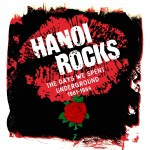
“Tragedy”, the opening cut from their debut Bangkok Shocks, Saigon Shakes, Hanoi Rocks, is a high energy rocker with a hint of punk and strong sense of melody that made for the perfect introduction to the band. Driven by tribal percussion, “Village Girl” is a solid rock track with some elements of glam and some great swirling psychedelic guitars. On “Stop Cryin’” and “First Timer” they infuse their sound with a bit of a punk edge with the former also including some Michael Monroe sax. “Don’t Never Leave Me” could be considered a glam ballad with a hint of sleaze and some spoken word interludes that really set it apart. The influence Hanoi Rocks had on Guns ‘n’ Roses is very evident on “Lost In The City”, a rollicking rocker that takes inspiration from Gene Vincent and Chuck Berry and mixes in a little glam. “Cheyenne” opens simply with acoustic guitar and vocals before kicking into a very hook-heavy track that’s a bit ragged around the edges and is highlighted by Monroe’s emotional vocals and heartfelt lyrics. The influence of The Clash is very evident in the track “11th Street Kids”. While not a total failure, their cover of Bobby Vee’s “Walking With My Angel” adds a bit of an edge and alot of saxophone, but is by far the poppiest track here and comes across as a bit gimmicky. Closing out the disc is “Pretender”, another straight-up, somewhat ragged rocker.
A year after their debut, the band was back with their sophomore effort, Oriental Beat. While for the most part it’s not too far removed from its predecessor, it’s a more cohesive release and the band seems more confident. “Motorvatin’” kicks things off and is a catchy rocker driven by Yaffi’s pulsing bass and a little harmonica. Along with the next two tracks “Don’t Follow Me” and “Visitor”, it’s definitely a precursor, but way better, to bands like Poison and Faster Pussycat. The punk influence isn’t quite as evident this time around, but there are several tracks, the glammier New York Dolls sounding “Teenangels Outsiders”, “M.C. Baby”, which is reminiscent of The Damned, and The London Calling era sound of “No Law Or Order”, where it’s still in the forefront. While the title cut is pure, driving ragged glam rock, several other cuts find them expanding the diversity of their sound. “Sweet Home Suburbia” has a slinky, somewhat funky shuffle and “Devil Woman” and their cover of Hoyt Axton’s “Lightnin’ Bar Blues” both dip their toes in the bluesy side of things. The album closes fittingly with “Fallen Star”, a deeply emotional vocal and piano ballad.
Released later in 1982, Self Destruction Blues was a compilation of singles and b-sides that had previously only been available in Finland. While there are a few lesser tracks, it works very well as an album and for the most part doesn’t feel like a compilation. First up is “Love’s An Injection”, a glammed up rock anthem and one of the album’s stronger tracks. Next is “I Want You”, which along with “Kill City Kills” tap into a bit of Stones swagger. Two of the most infectious tracks are “Cafe Avenue” and “Nothing New”, the latter of which is made even better with a rollicking piano and handclaps. Both are more on the pop side of things with very strong hooks. The title track is a slice of straight up Chicago styled blues with some great harmonica from Monroe. They stick to the blues on “Beer and a Cigarette”, a sleazy blues rocker with a bit of a “Train Kept A-Rollin’” groove and more harmonica. If it wasn’t for the fact that it’s a compilation, “Whispers In The Dark”, a synth rock tune, and “Desperados”, which kind of just lopes along and has a bit of a silly vibe, would both be a bit of a misstep. Neither cut is really bad, but they just really don’t feel like they are Hanoi Rocks tunes. “Taxi Driver”, driven by a chugging bass line and often reminiscent of “Summertime Blues”, is not a bad song, but is still one of the weaker tracks here. The album gets back on track for the last two cuts with the straight-up punk of “Problem Child” and the dark, piano driven “Dead By Xmas”.
In 1983 the band relocated to London and released Back To Mystery City, which was produced by former Mott the Hoople members Dale “Buffin” Griffin and “Pete “Overend” Watts, and marked the debut of Razzle on drums. After kicking things off with “Strange Boys Play Weird Openings”, a short, English folk instrumental comprised of acoustic guitar, flute and birds chirping, the big sounding “Malibu Beach Nightmare” explodes with a blast of Ramones influenced punk that has a party like atmosphere complete with sax and a rollicking piano. "Mental Beat" starts off with a Ramones drive, but then evolves into a bit of a noisy, offbeat singalong. Inspired by the apartment full of rats they lived in after moving to London, “Tooting Bec Wreck” has a raw rockabilly foundation and a bit of the atmosphere of The Cure. Slowing things down a bit, “Until I Get You” is a really strong ballad that still has their edginess and grit, while “Sailing Down The Tears” is more of a midtempo glam track with a hint of the Stones, and “Lick Summer Love” is a rocker with a slow, slinky groove and more of Monroe’s sax. The next two tracks, “Beating Gets Faster” and “Ice Cream Summer” are both straight-ahead rockers but are a little too generic and polished and don’t really have any of that grit that makes them stand out. They get back on track for the title track, another ragged glam rocker with a chorus that is extremely close to “Mony Mony”.
The final disc is their live album All Those Wasted Years, which was recorded at London’s Marquee Club in December 1983 and really shows the band at their finest. Compared to the studio versions, most of the tracks are a little heavier and a little rawer. The band sounds extremely tight and Razzle’s drumming is especially impressive. After opening the show with a great cover of The Chantays’ surf classic “Pipeline”, they tear through a set of some of their strongest cuts. In addition to thirteen originals, they also throw in a handful of covers, including Hoyt Axton’s “Lightning Bar Blues”, Alice Cooper’s “Under My Wheels”, The Stooges’ “I Feel Alright” and the blues classic “Train Kept A-Rollin’”.
Following the albums found here, the band signed to CBS and released the album Two Steps from the Move in August of 1984 and things were looked very promising for the band. Unfortunately, that was derailed four months later when Razzle was killed in the infamous car wreck with Vince Neil. While this resulted in the band breaking up the following year, since that time there have been several reunion albums and tours.
It's been over forty years since Hanoi Rocks hit the scene, and there are a multitude of bands who were influenced by them, but there has really never been another band that sounded quite like they did. While this box set is great and it's nice to have all these releases together in one place, the one big drawback is that they have all been reissued over the years with bonus tracks and unfortunately none of those are included here.
Tony Valentino - Dirty Water Revisited

Sinner - Born To Rock - The Noise Years 1984-1987

Danger Zone was their first album with Noise and it’s a solid amalgamation of NWOBHM and eighties metal along often with elements of Accept, Judas Priest and Iron Maiden. It is well-produced and pretty much straight-ahead metal from start to finish. Sinner’s vocals have just the right amount of gruffness, the guitar playing is strong throughout, and the drumming has a good crisp sound, which sometimes works better than others. The album opens strongly with the twin guitars of the title track that give it somewhat of a Thin Lizzy groove. They slow things down with “No Place In Heaven”, a midtempo track with just a hint of a blues groove, and then speed it right back up with “Scene Of A Crime”, a slightly Maiden-like cut driven by some powerful drumming. Some of the other highlights include the near thrash “Fast, Hard & Loud”, “Razor Blade” with it’s hints of Priest and a great George Lynch styled solo, and the early Motley Crue sounding “Rattlesnake”. Danger Zone really found the band firing on all cylinders.
Touch Of Sin was released the following year and found Herman Frank on guitar. It’s a pretty good follow up, but it’s a little more polished and melodic and missing some of the edge of its predecessor. “Born To Rock” starts the album promisingly with a symphonic intro leading into a big anthemic rocker, but it becomes a bit generic. Tracks like “Shout” with its driving Iron Maiden gallop and strong guitar solo, “Out Of Control”, which has more of a modern metal sound and a bit of a groove, and the speed metal cut “Too Late To Run Away”, are some of the stronger songs. Other highlights include “Emerald” and “Masquerade”, mixing together Maiden, Priest and Thin Lizzy and the midtempo “Hand Of Fate”. Listening to it now almost forty years later, it doesn’t quite stand up to Danger Zone, but reading the liner notes, Sinner says it was the “perfect progression”. Also included on disc two are five bonus tracks including two that were on a 1994 reissue of the CD and three that were originally released on 12” singles and are basically extended versions of album tracks.
With the keyboards coming through prominently only fifteen seconds into “Hypnotized”, the first track on their next album Comin’ Out Fighting, the signs are there that something is different here. With the exception of a handful of tracks this is a pure melodic rock album, which was apparently more the direction the label wanted them heading and not the band. Having said that, if you are a fan of melodic rock, there are some really strong tracks here. In addition the the aforementioned opening cut, there is “Age Of Rock”, which actually has a little bit of an edginess to it, and the hook heavy “Lost In A Minute” where the keys work extremely well with some really nice synth runs. A couple of tracks that harken back to their earlier, heavier side like the title track and “Playing With Fire”, which is like a slightly less heavy Maiden. There are also a few really big missteps with the sappy ballad “Don’t Tell Me (That The Love Is Gone)”, “Germany Rocks” and their cover of “Rebel Yell” that is virtually a karaoke version complete with Sinner doing his best Billy Idol vocal, but overall this is still an enjoyable release.
Sinner’s final album for Noise and the last one here is Dangerous Charm. Unfortunately, this time around they went even further in the AOR direction, and the results just really aren’t very good. The guitars have largely been delegated to the background and the synths to the front. “Everybody Needs Somebody To Love”, with its chorus like backing vocals, comes off like a a poor man’s version of Foreigner’s “I Want To Know What Love Is”, the synths in “Tomorrow Doesn’t Matter Tonight” are identical to Bon Jovi’s “Livin’ On A Prayer”, and Sinner’s duet with Jacqui Virgil on “Nobody Rocks Like You” is like a bad Bryan Adams / Tina Turner. There are a few glimmers of hope with songs like “Gipsy” and “Fight The Fight”, a hard charging track that takes you back to their early days, but they are few and far between. The disc also includes “Last Dance”, a bonus track that has a good guitar solo, but otherwise if fairly nondescript. It was originally included on the 1994 reissue of the CD. While the album ends the box set on a bit of a negative note, as a whole Born To Rock - The Noise Years 1984-1987 is definitely recommended for metal fans of that era.
Brian Auger & Julie Tippetts - Encore (Remastered)

Divining Rod - Santa Monica & Other Golden Classics

Ben Reed - Bandaged

Brady Harris - Hotel In The Sky

Joe Meek and The Blue Men - I Hear A New World Sessions - An Alternative Outer Space Fantasy

After a short opening of otherworldy sounds of what appears to be bending metal, “Orbit Around The Moon” (take 1) builds on the foundation of the skiffle band with a simple, yet driving drumbeat, plucky guitar under layers of quirky sound effects, early electronic keys and a short section with haunting female vocals. “Entry Of The Globbots” (take 2) is a quirky little track with a military style drumbeat, some faint guitar, what appears to be kazoo and wordless (mostly just doo doo doo) vocals ending with more sci fi whooshing sound effects. Rounding out side one is “Love Dance Of The Saroos” (take 1), which starts with more sci fi effects and then shifts into a hypnotic track with another simple drumbeat, keys, faint guitar and plenty more effects giving off an outer space, spaghetti western vibe. The B-side to this disc opens with an early version of “Glob Waterfall”, which according to the liner notes, was amongst a seventeen minute long sequence of takes found amongst the Tea Chest Tapes. This early version is much shorter and stripped down to the bare minimum (most notably missing the cymbal crashes) coming off more like an experimental sound collage. Unlike the three plus minute version on the original EP, the rehearsal version of “Magnetic Field” is just over a minute long and is more of a fun glimpse into Meek experimenting with things with some starting and stopping along with studio chatter and what sounds like a little plunking guitar, squeaking keys, possibly finger cymbals and some effects. Next up is an extended take of “Valley Of The Saroos”, a somewhat, laid-back track driven by a simple beat, but this time around with a substantial amount of effects added to the mix. Closing out the disc is the outstanding take IV of “Dribcots Space Boat”. The bouncy hooks of the version that was on the reissued extended version of the EP are still here, but the tempo is a little faster and the keyboard notes are held a little longer making it less choppy. There is also a lot more use of echo and the inclusion of explosive effects at the end bring the whole thing to a fitting end. This record makes for a fascinating listen and really showcases Meek’s before its time production techniques with treated vocals, vari-speed tape, electronic instrumentation and sound effects. It is the perfect introduction to what is most definitely going to be an interesting box set.
Interview with The Hi-Tops
The Canadian four-piece The Hi-Tops recently released their outstanding sophomore EP entitled Characters. I had the chance to interview the band where we discussed the EP, the benefits of the four of them living together, the diversity of some of the new songs and more.

We're from Calgary, Alberta Canada! I (Kole) grew up with Luke, our guitarist, going to school and being friends since kindergarten! I met Will in high school and played hockey with Chandler. Two years after we were all interested in starting a band, so we got together and started jamming in my parents garage!
I read that all of you now live together in a house in Calgary and wrote all the songs on the EP there. Can you tell me about this?
In September 2022 we all moved in together! Being together just created an extremely creative space where we all felt we could get better in. There were no parents or siblings telling us to turn down, so we really felt like this opportunity was our best chance to create and really build our chemistry and our sound.
I’m assuming that wasn’t the case with the first EP. How do you feel that made this EP different?
Every idea on the first EP was created independently and then brought to a jam session. On this EP whenever someone was practicing an idea the whole house could hear that idea develop and hear the inspiration and the approach towards it. This gave each song more context to how the lead songwriter was hearing the polished idea. We have also just all matured musically since the first EP so the ideas were just better and easier to work with.
The band has been together since 2019, which is right before the start of the pandemic. How did that impact the band and did the pandemic have anything to do with the decision to move in together?
The pandemic gave us a great chance to slow down and really focus in on our craft. We all kinda realized that the pandemic wasn’t ending any time soon, so we decided to all really hone in on our respected instruments which made gigging post pandemic an extremely smooth process. To your second question - there was a period of time where we weren’t allowed to see each other and jam, so when the opportunity came to move in we wanted to ensure that we could always jam no matter the circumstance.
While the majority of the songs on the EP are on the heavier end of things, there are a couple that are more on the mellow or poppier side of things. First up is “Peaches and Cream”, which is a track that I really love and is definitely the most different. It has an extremely hook-heavy 80’s alt-pop vibe that to me at times sounds a little like the band The Housemartins. Where did the inspiration, and the direction, of that song come from?
I had been listening to a lot of Australian bands at the time (Ocean Alley, Sticky Fingers, Dear Sunday, Skeggs) and I really started to like the way they used bright sounding major and minor chords all over the fret board. Specifically “Up In The Clouds” by Skeggs really inspired a fast paced melodic chord progression that eventually became “Peaches and Cream”.
The other song is “Old Enough”, a track that starts off slower and atmospheric with hints of Santana and The Doors. It also has a little jazz influence and then there’s a great guitar solo towards the end. What can you tell me about that one?

Have you had much feedback from older fans about these different sounding songs?
The main feedback has kinda just been how we always seem to be improving. Though the songs are different, you can still hear our voices and our characteristics that make us The Hi-Tops. We definitely write a diverse catalogue of music but we kinda always know that it still sounds like us, and we’re not trying to sound like anyone else.
Even though the other songs are all heavier there is still plenty of diversity within them. “Shiver” and “Pretender” both have a bit of a punk punch to them, while “Change of The Season” is more classic rock and “Criminal” has a big stadium sound to it. Is the diversity something you consciously strive for or does it just happen?
I think it comes more naturally. We of course never try to write the same thing twice, and definitely never wanna be bound to one genre. We all pull from so many different influences that change week in and week out so naturally the ideas change and the songs change with them. When we wrote “Shiver” the band was listening to a ton of Billy Talent. With that we just wanted to write a song with that level of intensity and that level of Ian D’sa riffage and I think we came as close as we could! Conversely, when I wrote "Change of the Season", I was listening to a Billie Eilish live concert and wanted to write something with a pop like hook but tied together by solid song writing.
Do you see the band continuing to have more diverse songs and musical directions on future releases?
This past EP was recorded in May of 2022 so we have been sitting on these songs for a while. With that we have written a ton of other songs and I can guarantee that the next catalogue of releases is going to continue to be just as diverse.
You have a really fun video for “Change Of The Season” that’s reminiscent of some of the classic, somewhat goofy, videos that use to be all over MTV. Can you tell me about that?
One of our favorite movies ever is Boogie Nights. We talked to the director of our music video Chris from “Melodic Imagery” and basically said we wanna fuse Boogie Nights, with the “Sabotage” Beastie Boys video, with the “3s and 7s” Queens of the Stone Age video. We can't compliment him enough, because he did a lot of the heavy lifting on that one and really brought it together. That one was really just us trying to be as goofy as possible while putting together a killer music video.
I read that the band was initially called House Hippo. Is there a story behind that name and why the change?
We honestly just were ready for a change. House Hippo was fun but we kinda just felt we grew out of it.
What are your plans for supporting the EP now that it’s out?
We are heading for a small little Canada tour here in June! We're playing in Edmonton June 17th, Toronto June 22nd, Montreal June 23rd, Hamilton June 25th, Frogfest in Alberta June 30th and finishing off in Calgary at the Palomino July 1st. All the ticket links in are available in our bio!
Is there anything else you would like to share with readers?
If you’re in town for any of the dates listed above! Come on down, we would love to meet ya! Follow us on Instagram @thehitopsband.
(Sodeh Records) (The Hi-Tops / The Hi-Tops - Facebook)
Luther Grosvenor - Under Open Skies, Remastered & Expanded


